Precious Metals
January 6, 2026
5 min
Precious Metals


As of January 1, 2026, China is implementing export controls that threaten to starve the world’s solar and EV industries.
Notably highlighted by @elonmusk and others.
So, in light of these new controls, here is a brief history on China’s centuries-long obsession with silver.
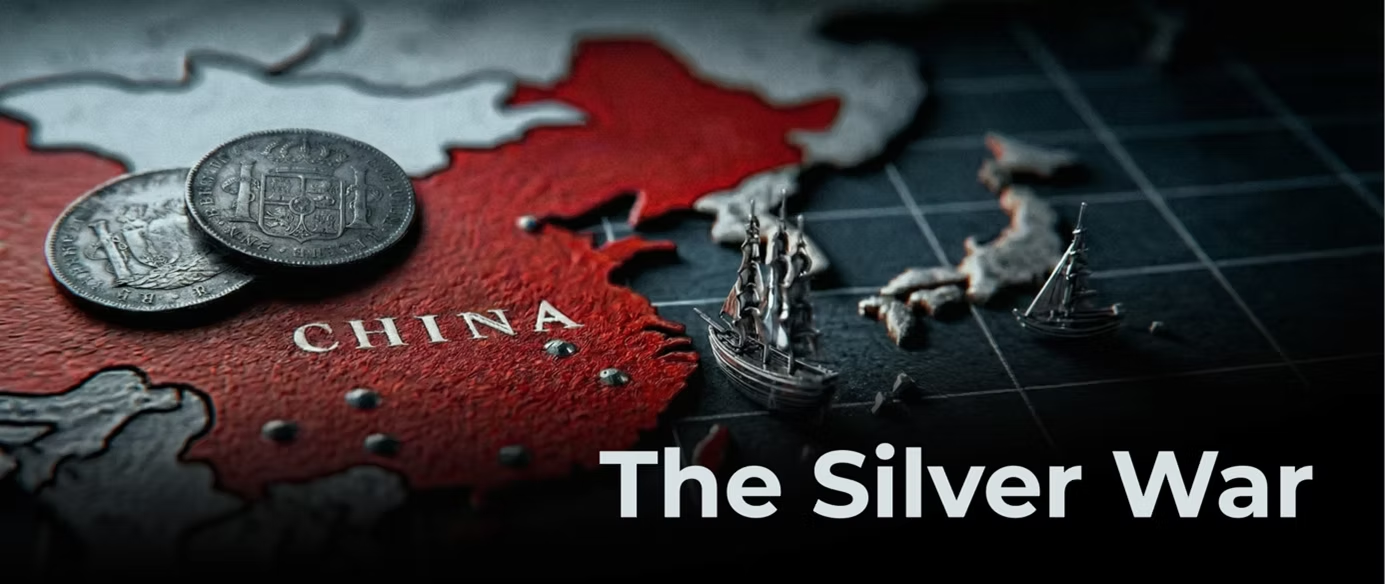
The Silver War
In the modern world, trade deficits are often viewed as abstract numbers on a screen. But for most of human history, trade was physics. It was the movement of physical mass from point A to point B.
When the balance of goods tilted too far in one direction, the correction wasn't abstract nor fixed by adjusting interest rates. Instead, you could feel the correction like a cannonball to the chest.
The First Opium War
It is often remembered as a moral tragedy. While true, it is also a story about silver that few know about.
So, if you put on your "macro/history glasses"—and look at the transactions rather than the morality—a different picture emerges.
A war for Silver.
It is a masterclass in what happens when a global superpower runs out of money, and the lengths it will go to turn the tide.
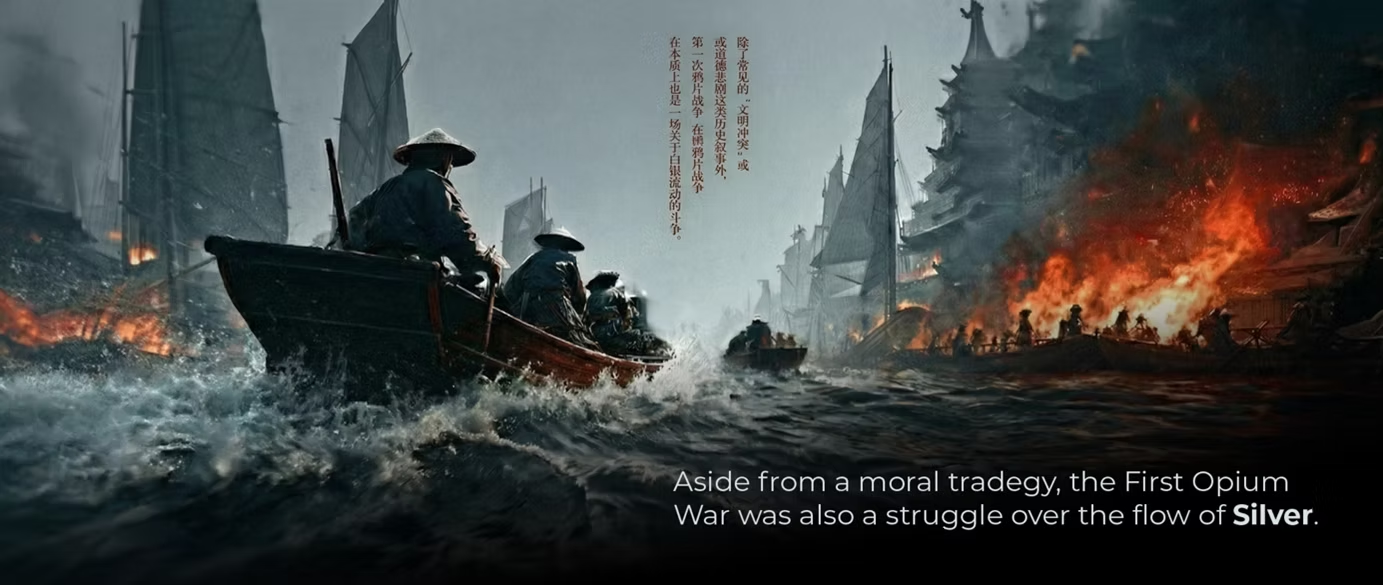
Aside from a moral tragedy, the First Opium War was also a struggle over the flow of Silver.
Let’s rewind the tape to the late 18th century. Global trade had a fundamental problem, a problem that kept the directors of the British East India Company (EIC) awake at night.
For nearly a century, the Qing Dynasty arguably ran the world's most successful mercantilist operation.
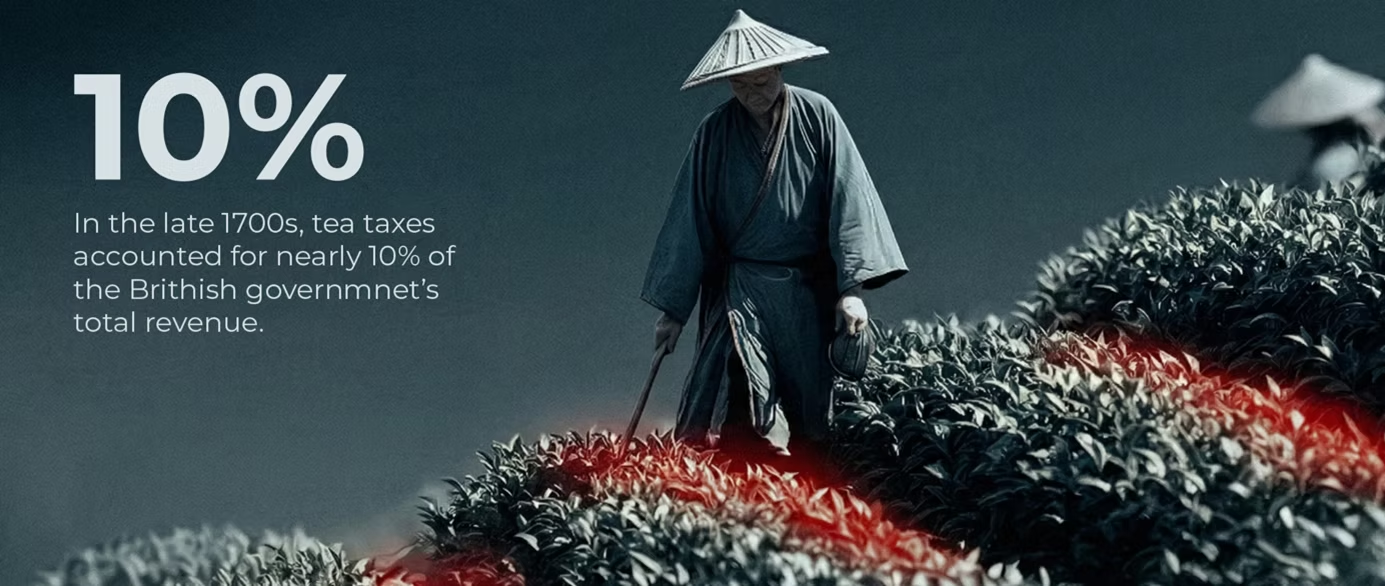
Europe, and specifically Great Britain, had an insatiable appetite for Chinese luxury goods—tea, silk, and porcelain. And by the late 1700s, tea taxes accounted for nearly 10% of the British government’s total revenue.
The problem was that trade was rather one-sided. This created a massive structural imbalance. A trade balance that was settled in the only metal the Chinese wanted. Silver.
The Chinese Emperor Qianlong famously dismissed King George III and all British attempts to sell their own manufactured goods, stating, “Our Celestial Empire possesses all things in prolific abundance and lacks no product within its own borders.”
However, under the "Single Whip" reforms, every peasant in China was structurally short the silver as they had to pay taxes in Silver. And since China lacked sufficient domestic silver mines at the time, they had effectively outsourced their money supply to foreign powers.
Structurally, this was a ticking time bomb.
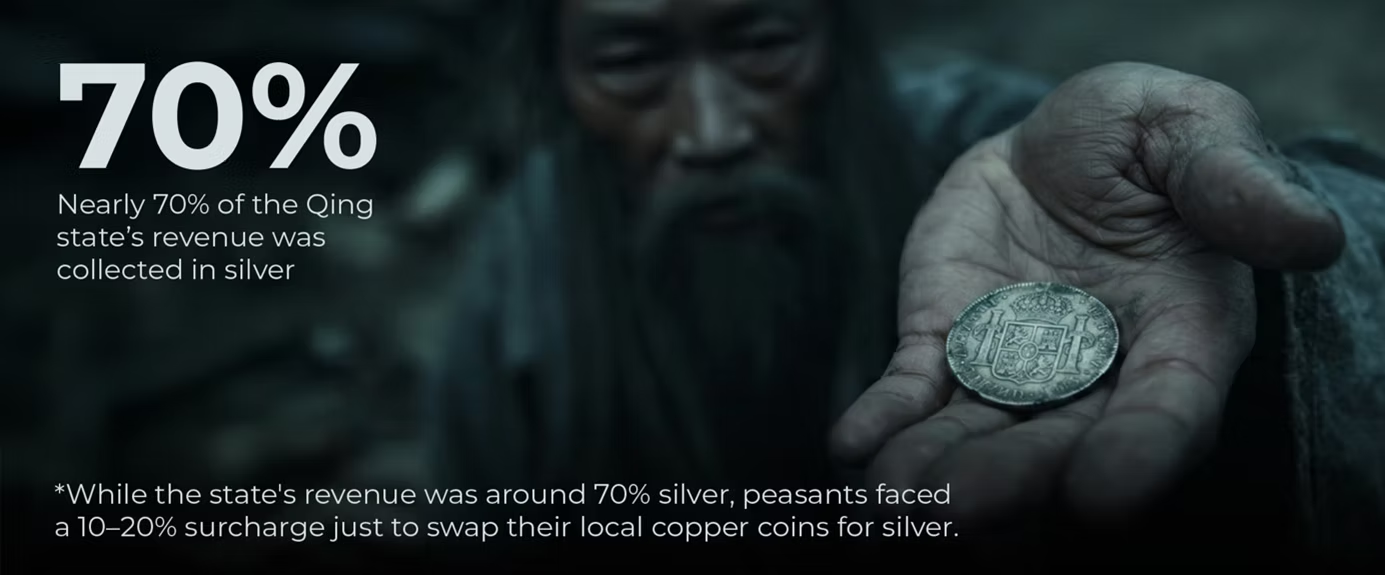
The British East India Company (EIC) was effectively hemorrhaging the British Empire's wealth (silver reserves). They were forced to buy silver from continental Europe and Mexico (the famous Spanish "Pieces of Eight"), ship it halfway around the world, and deposit it into the Chinese economy where it vanished, never to return.
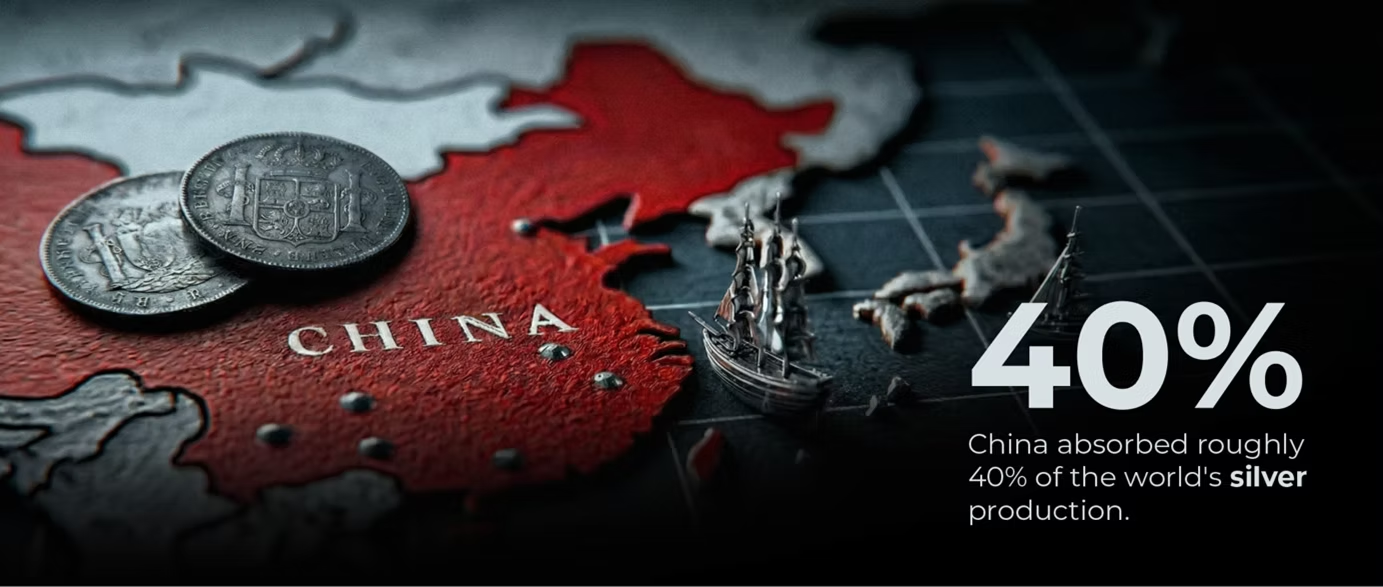
Between 1700 and 1800, estimates suggest China absorbed roughly 40% of the world's silver production.
The math was unsustainable. The Empire needed to turn the tide.
They came up with a product with three specific characteristics: high value-to-weight ratio, inelastic demand (addiction), and the ability to be produced within the Empire’s borders (India).
They found it in the poppy.
The introduction of opium changed the global flow of capital with terrifying speed. The EIC didn't trade opium directly—that would be "illegal" and damage their charter. Instead, they created a sophisticated laundering scheme:
- The EIC monopolized opium production in India.
- They auctioned the opium to "private" traders.
- Traders smuggled the drug into China.
- Sold the opium for silver.
- Then deposited the silver back to the EIC in exchange for bills of credit in London.
Suddenly, the flow reversed. By the 1830s, silver was no longer streaming into China. It was gushing out.

For China, this was a disaster. Their domestic economy was built on a bimetallic system: farmers traded in copper coins, but taxes were paid in silver. As silver left the country, the price of silver rose relative to copper.
In practice, this meant a massive tax hike for the Chinese farmer, even though the nominal tax remained unchanged. Purchasing power collapsed. The social contract was broken.
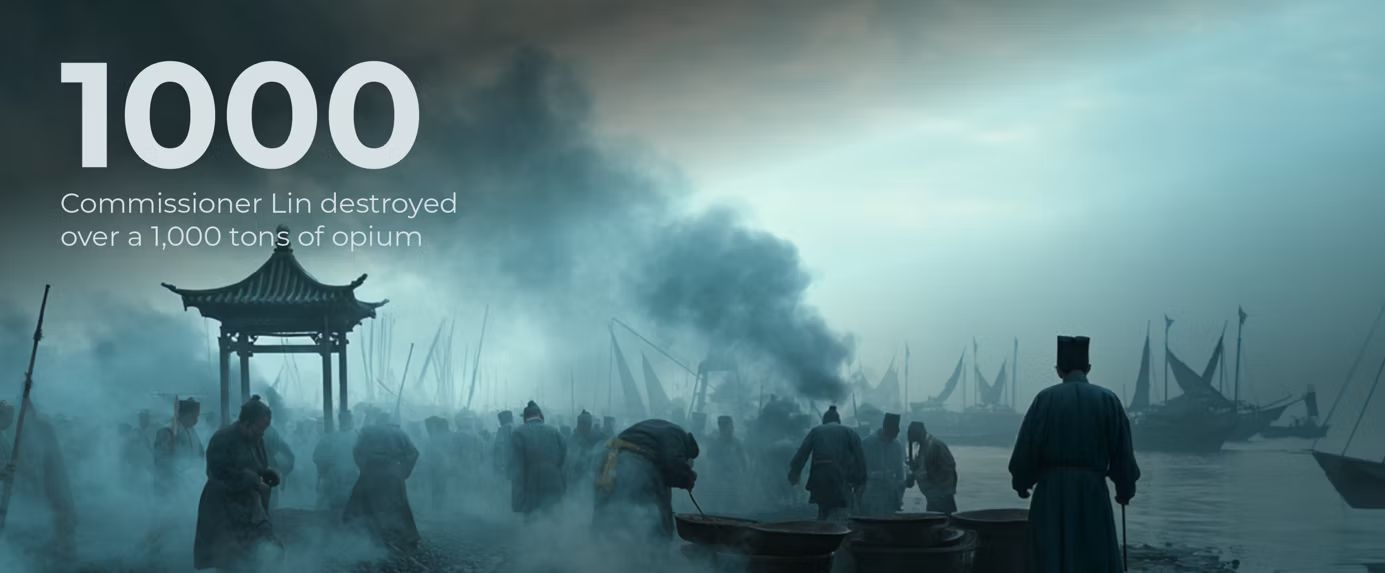
When the Emperor sent his commissioner, to Canton in 1839 to stop the trade, he seized and destroyed over 1,000 tons of opium. He mixed it with lime and salt and flushed it into the sea.
In London, the discussion was not about "forcing the opium onto another nation." This was about "Free Trade." To seize opium (property) was a violation of property rights and the free market.
By rebranding a drug bust as a violation of liberal values, London cleared the political path for the First Opium War.
The Kinetic Conclusion
The war itself was a formality. The British Navy, spearheaded by the iron-hulled steamship Nemesis, met Chinese wooden junks.
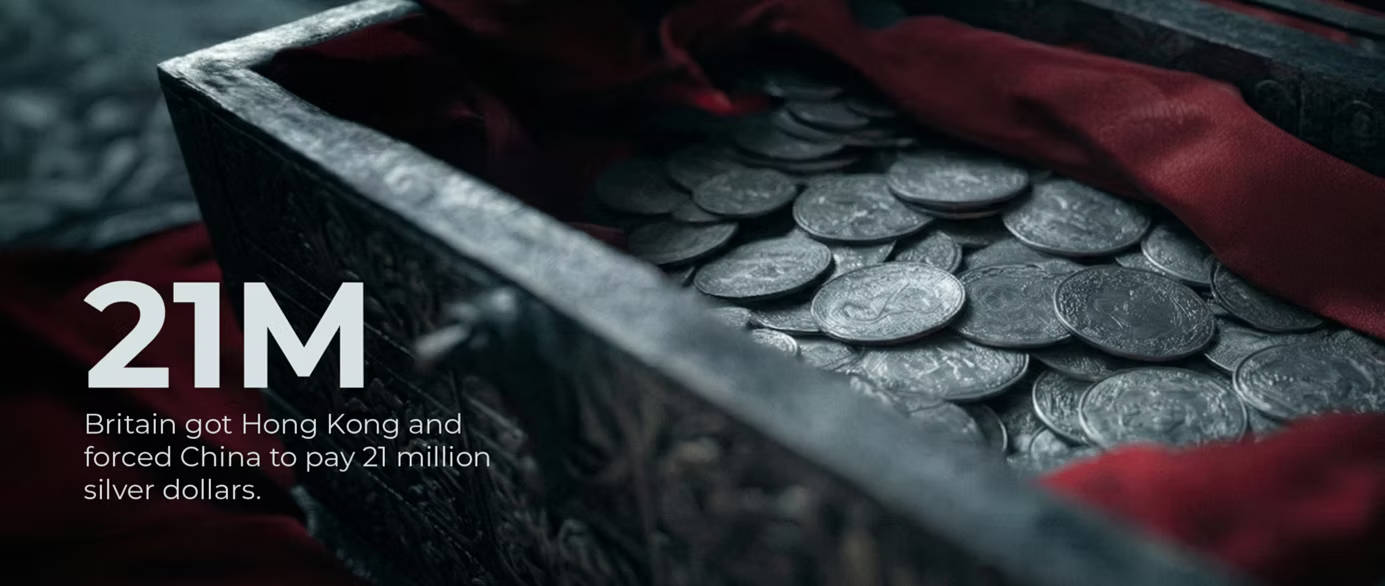
It was an asymmetric slaughter that ended at the negotiating table in Nanking in 1842 where Britain got Hong Kong and forced China to pay 21 million silver dollars.
- 6 million for the destroyed opium.
- 3 million for debts to British merchants.
- 12 million for war costs.
The circle was closed (for now) and the Empire had clawed back the silver it had spent on tea over the previous decades. But what the Brits didn’t realize was that dragons never forget.
Lesson learned
It was a hard lesson for China in sovereign risk: Never build an economy on a critical resource you cannot control. It is a lesson they have apparently learned.
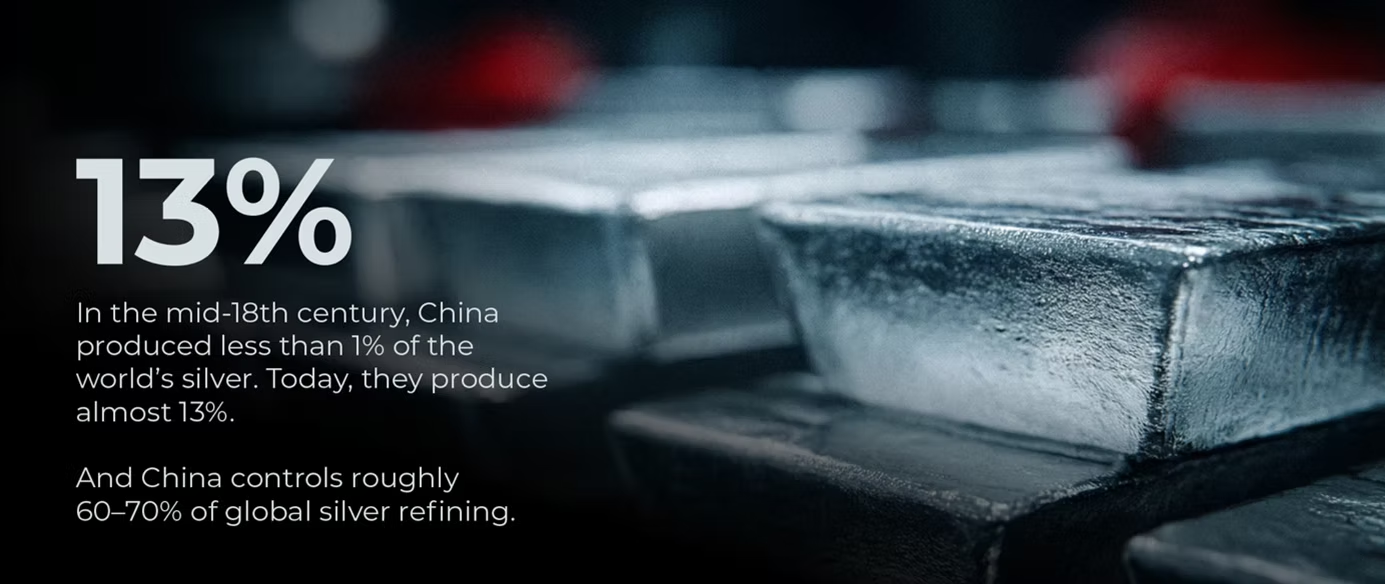
Fast forward to today, January 2026. The global silver dynamic has inverted. In the mid-18th century, China produced less than 1% of the world’s silver.
Today, they produce almost 13%.
But more importantly, while China still imports raw silver ore, it has spent the last two decades quietly cornering the processing capacity. Today, China controls roughly 60–70% of global silver refining.
And effective January 1, 2026, China has implemented new export controls on silver.
While China's government cites resource protection, environmental concerns, and the need to support domestic industries as official justifications analysts and market reports highlight deeper motivations.
China is facing surging domestic demand from its booming solar panel manufacturing and EV sectors. Silver is the conductive lifeblood of the green energy revolution. By restricting exports, China is elevating silver to the status of a strategic mineral.
This is a geopolitical squeeze. Just as Britain once weaponized opium to extract silver, China is now weaponizing silver supply to extract value from the West.
With the U.S. and Europe heavily reliant on Chinese refined silver for their own solar ambitions and defense applications, this chokehold creates leverage.
In 1839, the Dragon lost the Silver War because they could not stop the flow of metal out of their borders. In 2026, they seem focused to win the Silver War.
Thanks for sticking around. If you like this article feel free to let us know in our social feeds, as we are considering doing more of these.
Wishing you all a Happy New Year!
This post is for educational purposes only and does not constitute financial advice. Always do your own research.




Explore More
View All

Silver's Use Cases: A Visual Guide to Where the Metal Actually Goes
Silver's Use Cases: A Visual Guide to Where the Metal Actually Goes
Somewhere inside a pressurized-water reactor, an alloy that is four-fifths silver is absorbing neutrons to keep the core in check, a job most silver investors have never heard of. It is a useful reminder that the metal people picture as coins and jewelry mostly works elsewhere, across industry.
Ranked: The Countries That Produced the Most Silver in 2025
Ranked: The Countries That Produced the Most Silver in 2025
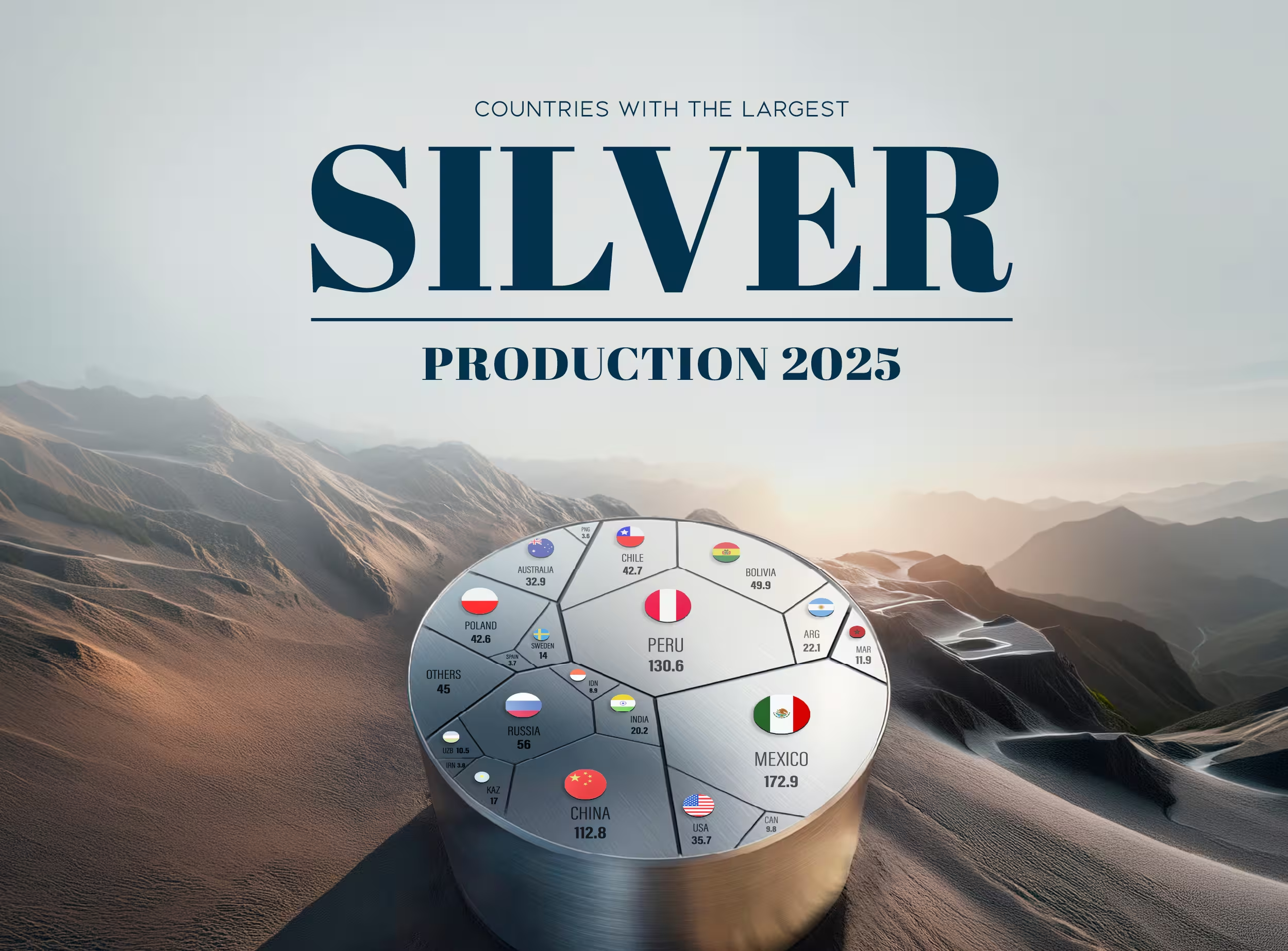
Mexico remained the world's top silver-producing country in 2025, mining 172.9 million ounces (Moz), roughly a fifth of global supply, according to the World Silver Survey 2026, produced for the Silver Institute by Metals Focus. But Mexico's lead narrowed: its output fell 5% for a third straight year, while second-place Peru climbed 7%. Global mine production rose 3% to 846.6 Moz, even as the ranking's top tier told a story of one leader sliding and its closest rival closing in.
Electric Vehicles Are Set to Become the Auto Industry's Biggest Silver Consumer by 2027
Electric Vehicles Are Set to Become the Auto Industry's Biggest Silver Consumer by 2027
Most of silver's 2026 story has been told from the supply side: a sixth straight year of structural deficit and a record price near $121 in January. Less examined is where the next leg of industrial demand actually comes from. With solar, silver's largest industrial use, now facing thrifting and substitution, the Silver Institute points to a quieter end-use picking up the slack: the automotive sector. A December 2025 study from Oxford Economics and the Silver Institute quantifies that shift, and the engine behind it is the electric vehicle.
Silver Market Balance: A 2026 Update
Silver Market Balance: A 2026 Update
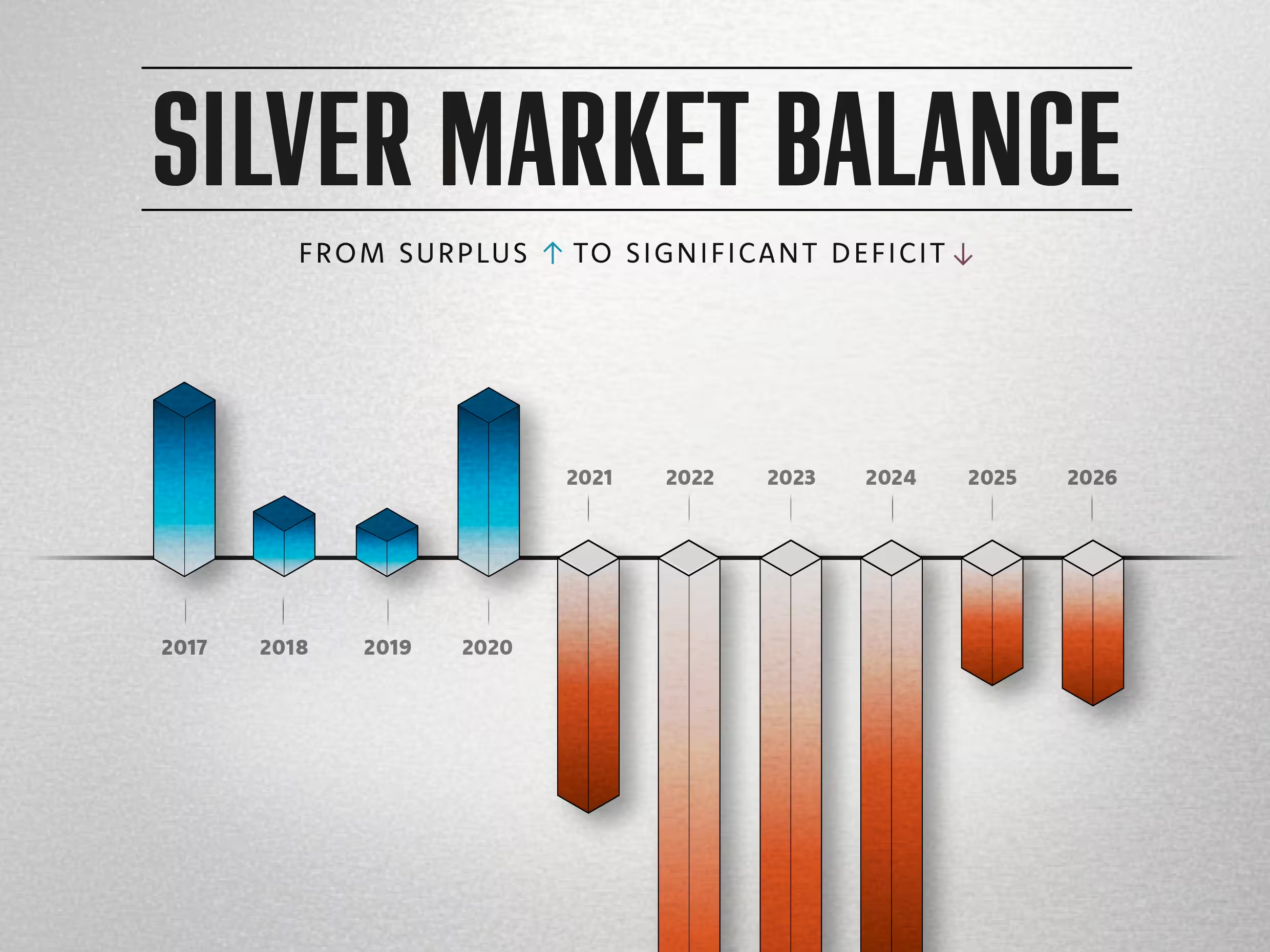
For the fifth year running, the world used more silver than it produced in 2025, and the World Silver Survey 2026 expects 2026 to extend that streak to six. The report, released in April by the Silver Institute and researched by the London consultancy Metals Focus, pegs the 2025 deficit at 40.3 million ounces and forecasts a wider gap of 46.3 million ounces this year. Each shortfall draws on above-ground stocks, leaving less metal readily available even as total inventories have held up.