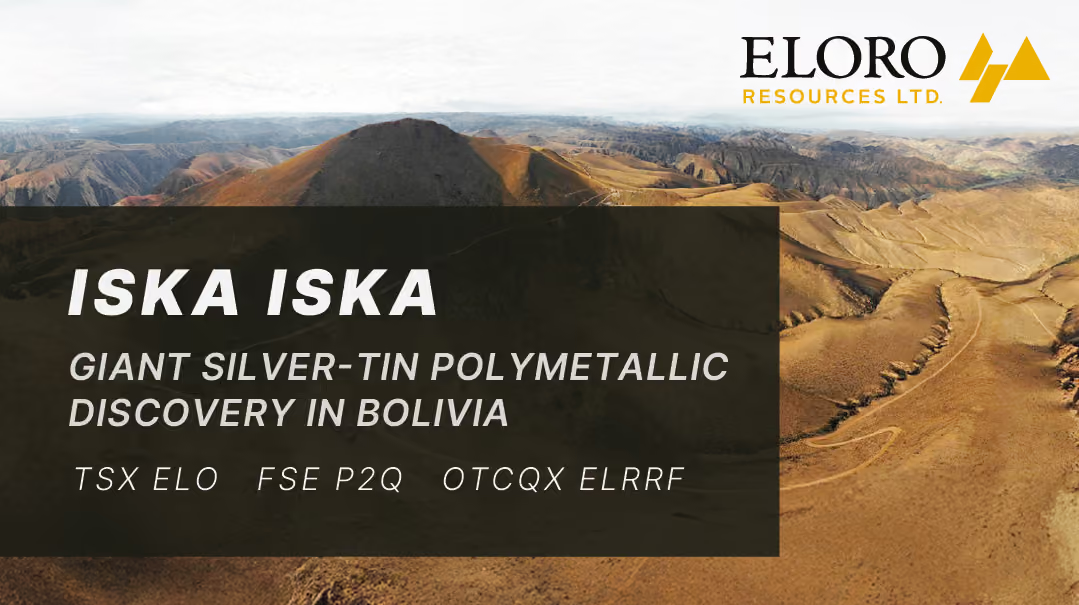










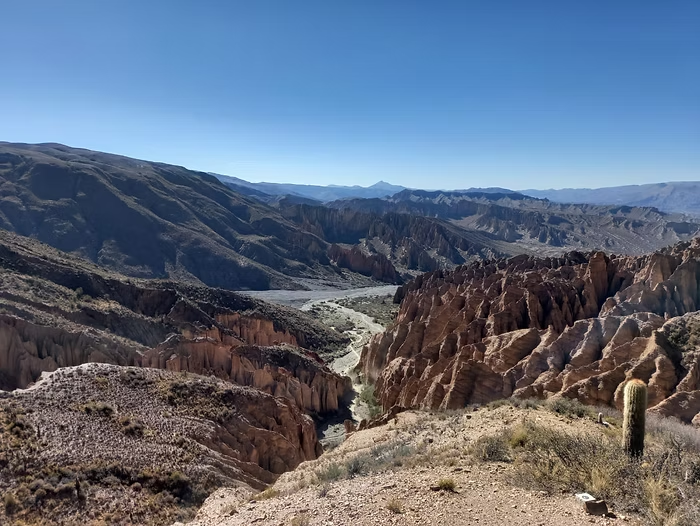
Eloro Resources (TSX: ELO), a company focused on the exploration and development of mineral properties, continues to advance its flagship asset in South America. Since our last discussion in September 2025, Eloro has further delineated its Iska Iska property in the Bolivian tin belt. The company recently released an updated Mineral Resource Estimate, expanding the project's scale to over 1 billion tonnes of combined Indicated and Inferred polymetallic mineralization, while also noting increased silver grades and improved tin recoveries.
latest articles
How Heat Sorts the Metals in a Polymetallic Deposit
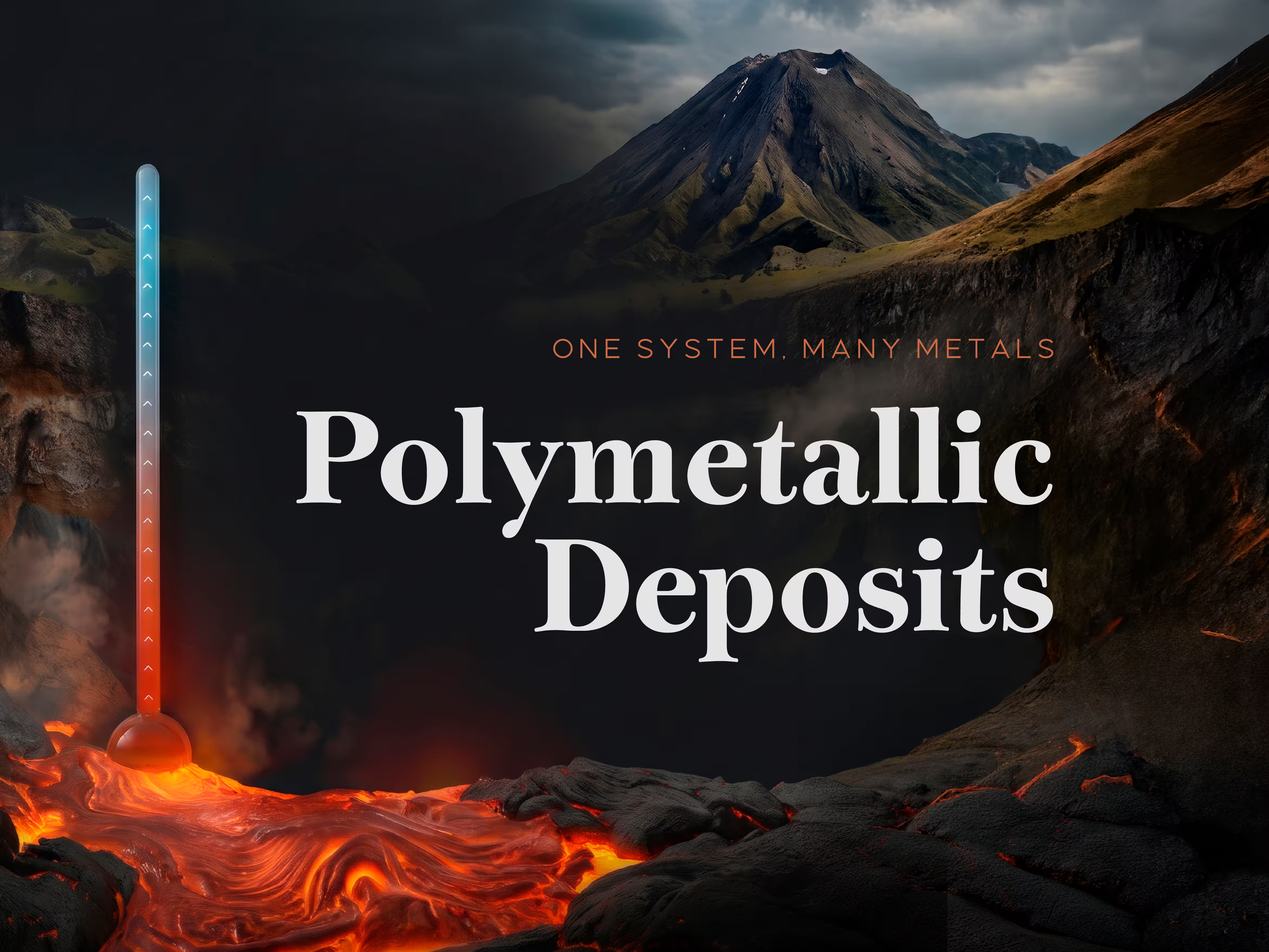
How Heat Sorts the Metals in a Polymetallic Deposit
On November 6, 2025, the U.S. Interior Department added copper, silver and lead to its final critical minerals list, among 10 new entries. All three are main metals of a polymetallic deposit, where the USGS vein model places them in zones around a single intrusion. Silver shows how closely these metals are linked. The USGS says U.S. silver is "primarily obtained as a byproduct from lead-zinc, copper, and gold mines", and six smaller metals on the infographic reach the market the same way.
popular
highlights
View All


The Uranium Opportunity: Limited Supply Meets Rising Demand
The Uranium Opportunity: Limited Supply Meets Rising Demand
In 2025, global uranium mine supply is projected to be 176 million pounds, while demand is expected to reach 182 million, resulting in a 6 million-pound deficit. This shortfall is expected to increase significantly over the next 15 years. By 2040, uranium demand is forecast to surge to 397 million pounds, a staggering 118% increase from 2025 levels, while supply is only expected to grow modestly to 201 million, up just 14%. The result: an anticipated deficit of 197 million pounds, equivalent to the output of 11 Cigar Lake Mines, one of the world’s largest uranium producers.
Gold
View All

Seven Events That Shaped a Century of Gold Prices
Seven Events That Shaped a Century of Gold Prices
In 1934, the US government set the price of gold at $35 an ounce. In September 2026, the market price averaged $4,319. Measured in today's money, gold has done more than keep up with rising prices. An ounce is now worth almost five times what it was when the price was set in 1934, and more than at the famous 1980 peak. For the companies that mine it, that has meant record margins.

Central Banks Have Been Net Gold Buyers Since 2010, After Two Decades of Net Selling
Central Banks Have Been Net Gold Buyers Since 2010, After Two Decades of Net Selling
Central banks bought more gold between April and June 2026 than in any second quarter on record, according to a World Gold Council report published on July 30. That keeps them net buyers this year, as they have been every year since 2010. Underneath, the picture is changing. Russia and Türkiye, both big buyers in the past, have been selling.

Gold Mines in West Africa: Two Billion Years in the Making
Gold Mines in West Africa: Two Billion Years in the Making
The nine West African countries with significant reported output produced about 15% of the world's mined gold in 2025, according to Metals Focus and World Gold Council data. Almost every mine on the map above was built in the past 25 years, and four more reached production in the last eighteen months: Lafigué in Côte d'Ivoire in June 2024, Kiaka in Burkina Faso in June 2025, Ahafo North in Ghana in October 2025 and Kiniero in Guinea in December 2025.
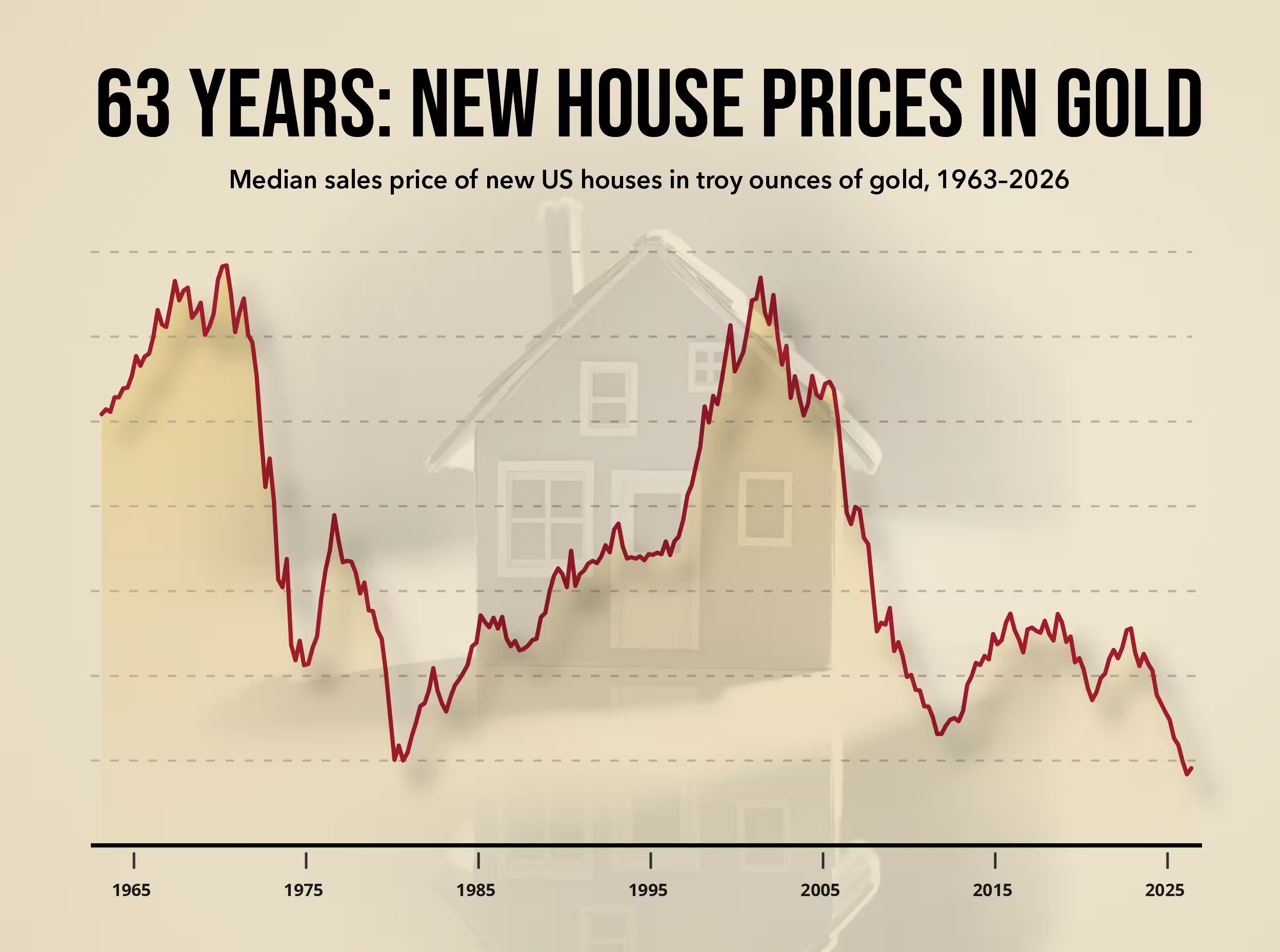
A Median New US Home Now Costs Less Than 100 Ounces of Gold
A Median New US Home Now Costs Less Than 100 Ounces of Gold
The US Census Bureau's July new-home report, released on August 25, put the median price of a newly built house at $393,800. HousingWire noted that was the lowest since July 2021. In dollars, the market has moved within a narrow band: the quarterly median has stayed between $408,500 and $435,400 since 2023.
silver
View All
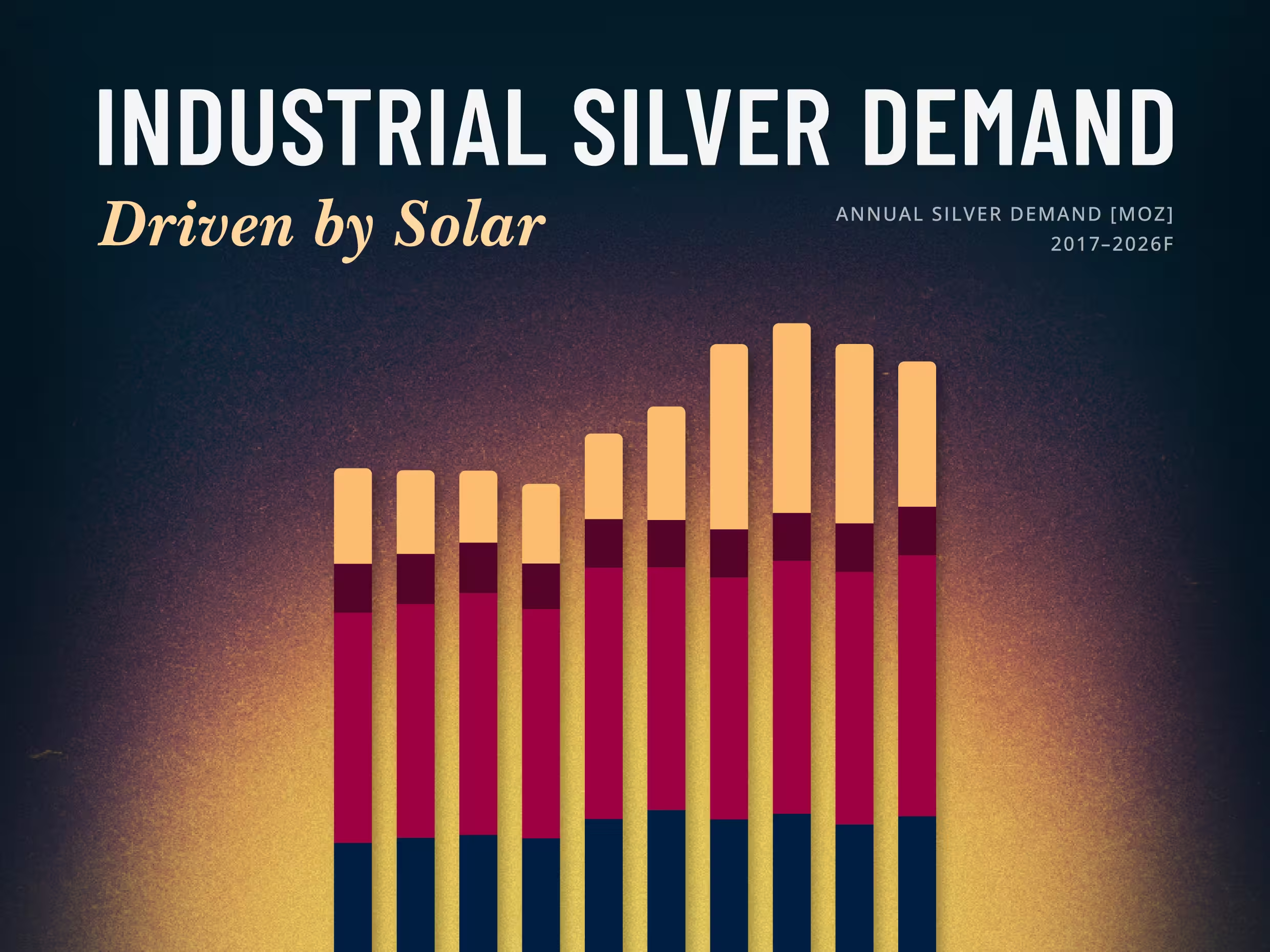
Solar Is Silver's Largest Industrial Market, and Not Easily Replaced
Solar Is Silver's Largest Industrial Market, and Not Easily Replaced
When LONGi Green Energy, the world's largest solar module maker, told investors on January 5, 2026 that it would begin mass-producing base-metal solar cells in the second quarter, it put a number on a pressure the whole industry feels. Solar is the largest single application within silver's industrial demand, and as the metal ran to a record above $121 an ounce in January, rising silver costs pushed manufacturers to accelerate efforts to reduce the metal per cell.

Silver in the Data Center: How AI's Power Crunch Is Building a New Pillar of Industrial Demand
Silver in the Data Center: How AI's Power Crunch Is Building a New Pillar of Industrial Demand
In early 2026, the artificial intelligence narrative shifted abruptly from software capabilities to physical hardware constraints. With tech giants committing hundreds of billions to new infrastructure—pushing global hyperscaler capital expenditures past $600 billion this year—the industry has collided with a new primary bottleneck: a severe power and thermal crunch.

Silver's Use Cases: A Visual Guide to Where the Metal Actually Goes
Silver's Use Cases: A Visual Guide to Where the Metal Actually Goes
Somewhere inside a pressurized-water reactor, an alloy that is four-fifths silver is absorbing neutrons to keep the core in check, a job most silver investors have never heard of. It is a useful reminder that the metal people picture as coins and jewelry mostly works elsewhere, across industry.

Ranked: The Countries That Produced the Most Silver in 2025
Ranked: The Countries That Produced the Most Silver in 2025
Mexico remained the world's top silver-producing country in 2025, mining 172.9 million ounces (Moz), roughly a fifth of global supply, according to the World Silver Survey 2026, produced for the Silver Institute by Metals Focus. But Mexico's lead narrowed: its output fell 5% for a third straight year, while second-place Peru climbed 7%. Global mine production rose 3% to 846.6 Moz, even as the ranking's top tier told a story of one leader sliding and its closest rival closing in.
copper
View All
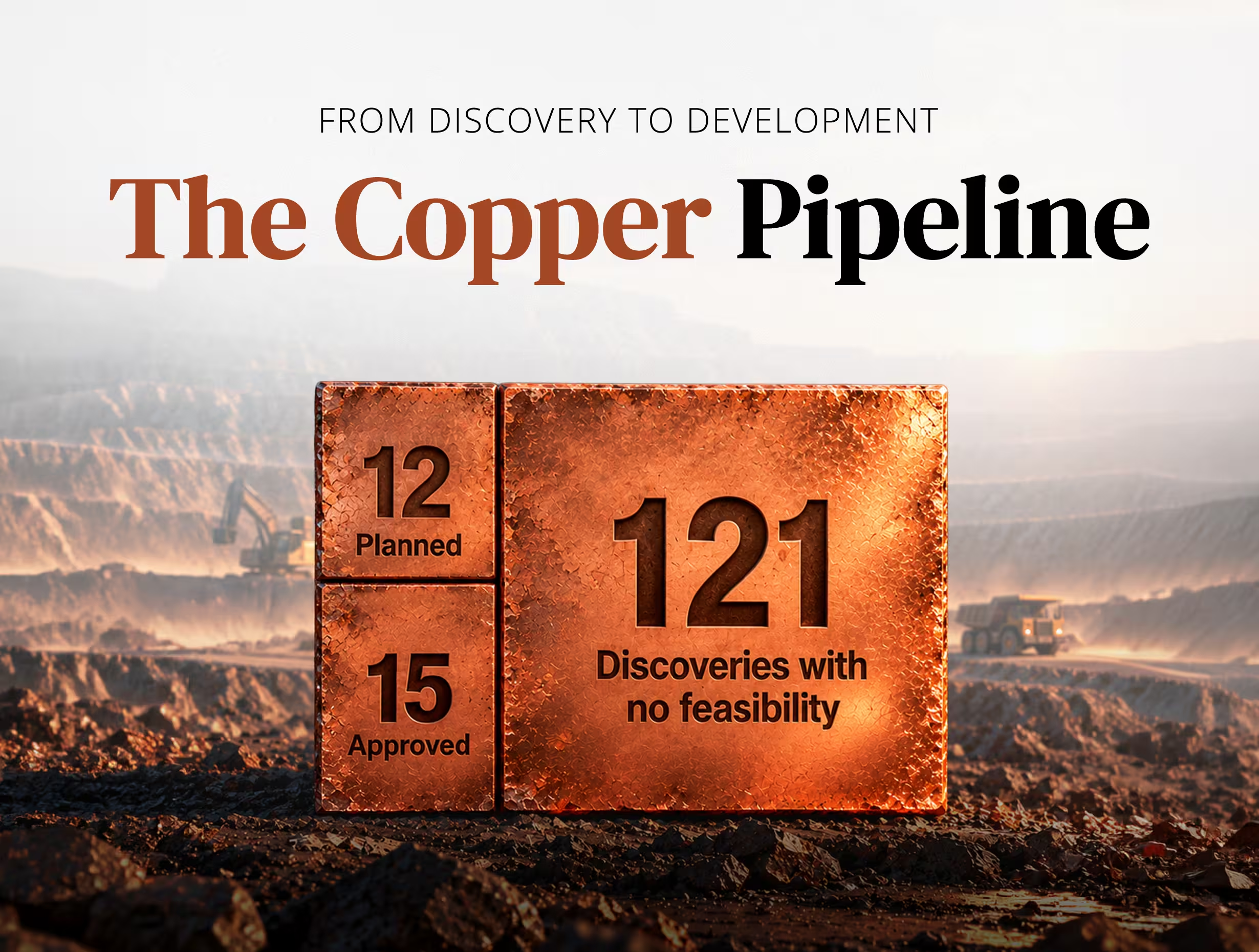
Most Major Copper Discoveries Since 1990 Are Still Not Mines.
Most Major Copper Discoveries Since 1990 Are Still Not Mines.
In May 2025, a joint venture of Lundin Mining and BHP released a resource estimate for its Vicuña district in the Andes, which S&P Global ranked as home to the largest greenfield copper discovery in 30 years. Per the same resource statement, the combined Filo del Sol and Josemaria deposits hold 13 million tonnes of contained copper in measured and indicated resources.
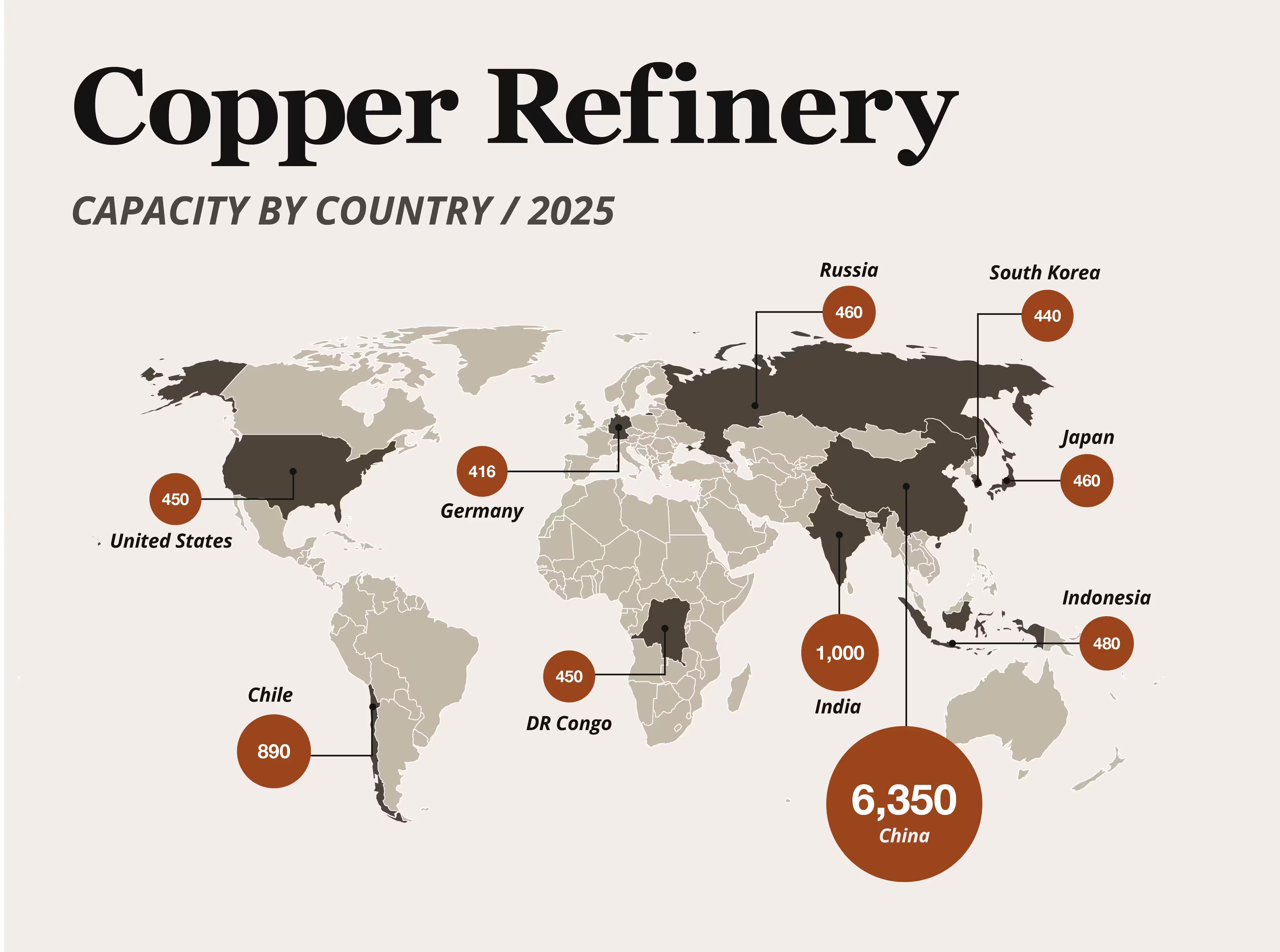
China Holds 56% of the Capacity at the World's 21 Largest Copper Refineries
China Holds 56% of the Capacity at the World's 21 Largest Copper Refineries
Indonesia's circle on the map above stands for a single plant: the Manyar refinery in East Java, operated by PT Freeport Indonesia, with 480,000 tonnes a year of capacity, according to the International Copper Study Group. It has been shut since the fourth quarter of 2025, after a mudflow at the Grasberg mine cut off its concentrate supply, and is due to restart this month at below 30% of capacity.
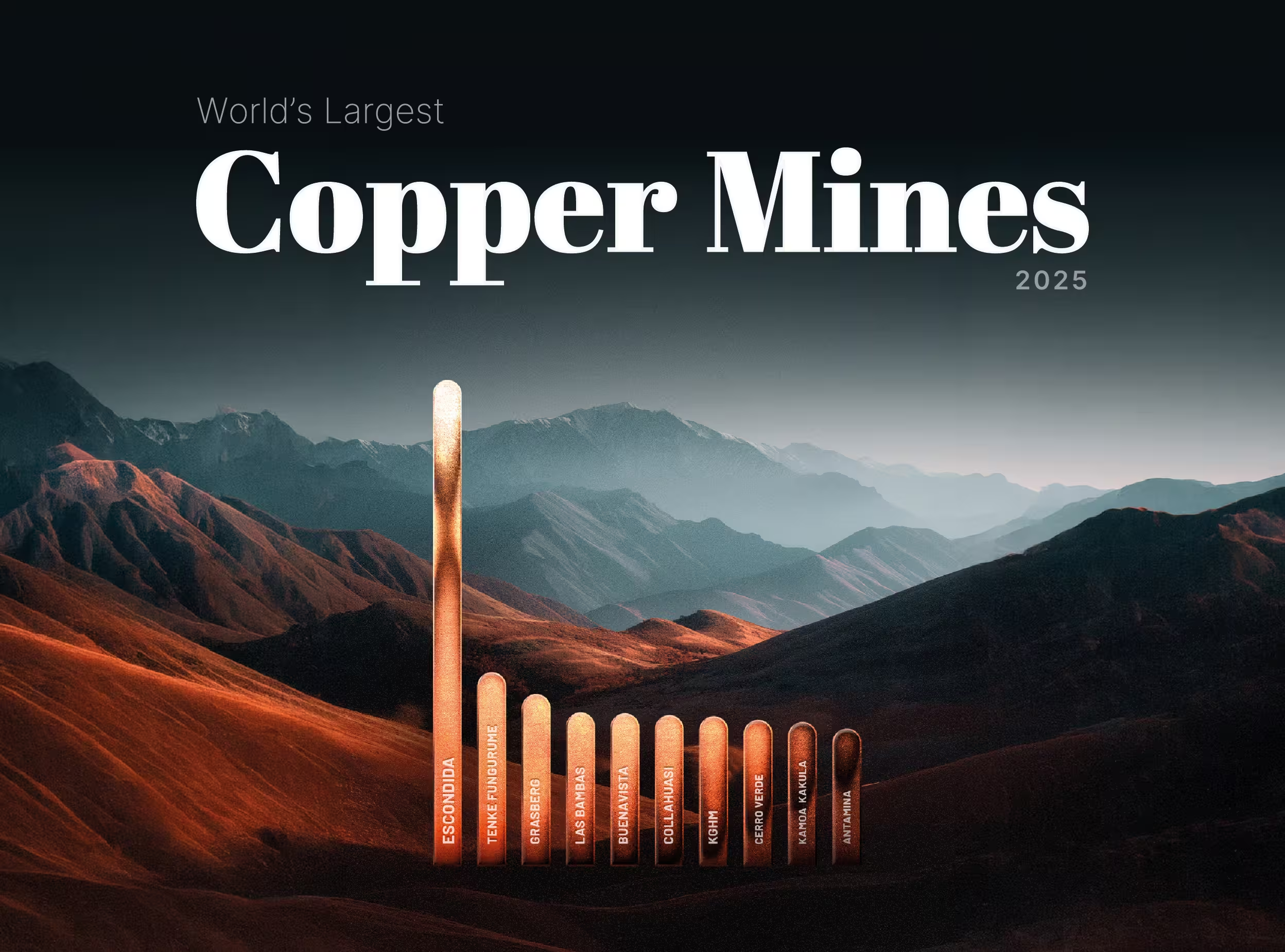
Ranked: The World's Largest Copper Mines (2025)
Ranked: The World's Largest Copper Mines (2025)
Copper has spent 2026 setting records, touching an intraday COMEX high of $6.71 per pound on May 13 amid AI-driven demand and supply shocks, against a backdrop where the ICSG now forecasts a 150,000-tonne deficit for 2026. In a market this tight, where the deficit thesis turns on lost tonnes, the question of where the world's copper actually comes from carries unusual weight.
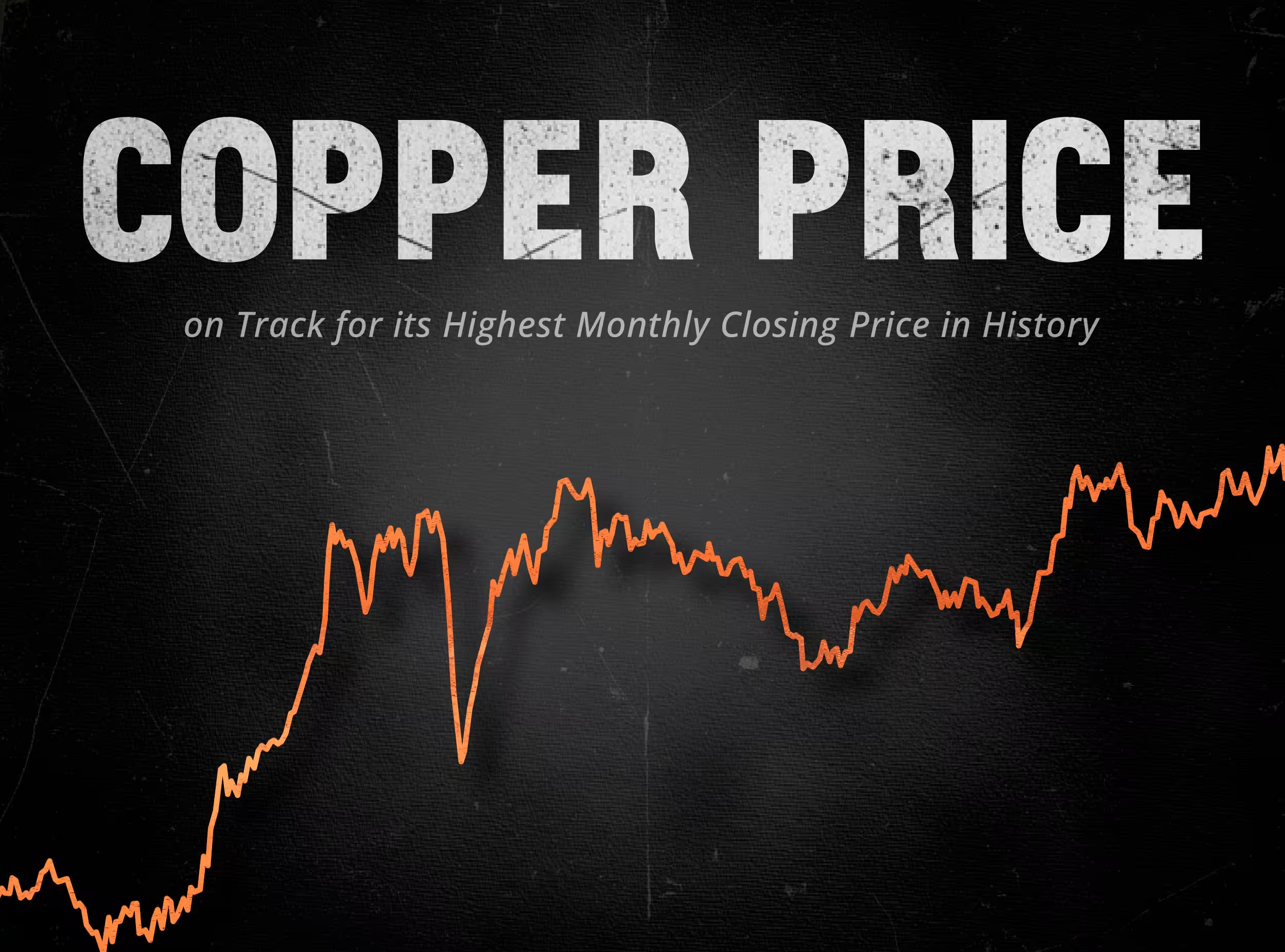
Copper on Track for Its Highest Monthly Close on Record: A Look at the Drivers
Copper on Track for Its Highest Monthly Close on Record: A Look at the Drivers
Copper has spent most of 2026 doing something it had not done in a quarter century: setting fresh records every few weeks. The COMEX contract printed an intraday all-time high of $6.71 per pound on May 13, and the May monthly close looks set to land at the top of the historical chart. In London, copper traded above $14,000 per tonne in mid-May, touching $14,196.50, within reach of the LME's January 29 record of $14,527.50.
commodities
View All

Rare Earths and the Humanoid Robot
Rare Earths and the Humanoid Robot
In April 2025, on Tesla’s Q1 earnings call, Elon Musk told investors that Optimus, the company’s humanoid robot, had been held up by a problem few outside the rare earth industry had been watching. “Optimus was affected,” he said, “by the magnet issue from China because the Optimus actuators in the arm do use permanent magnets” (Adamas Intelligence).
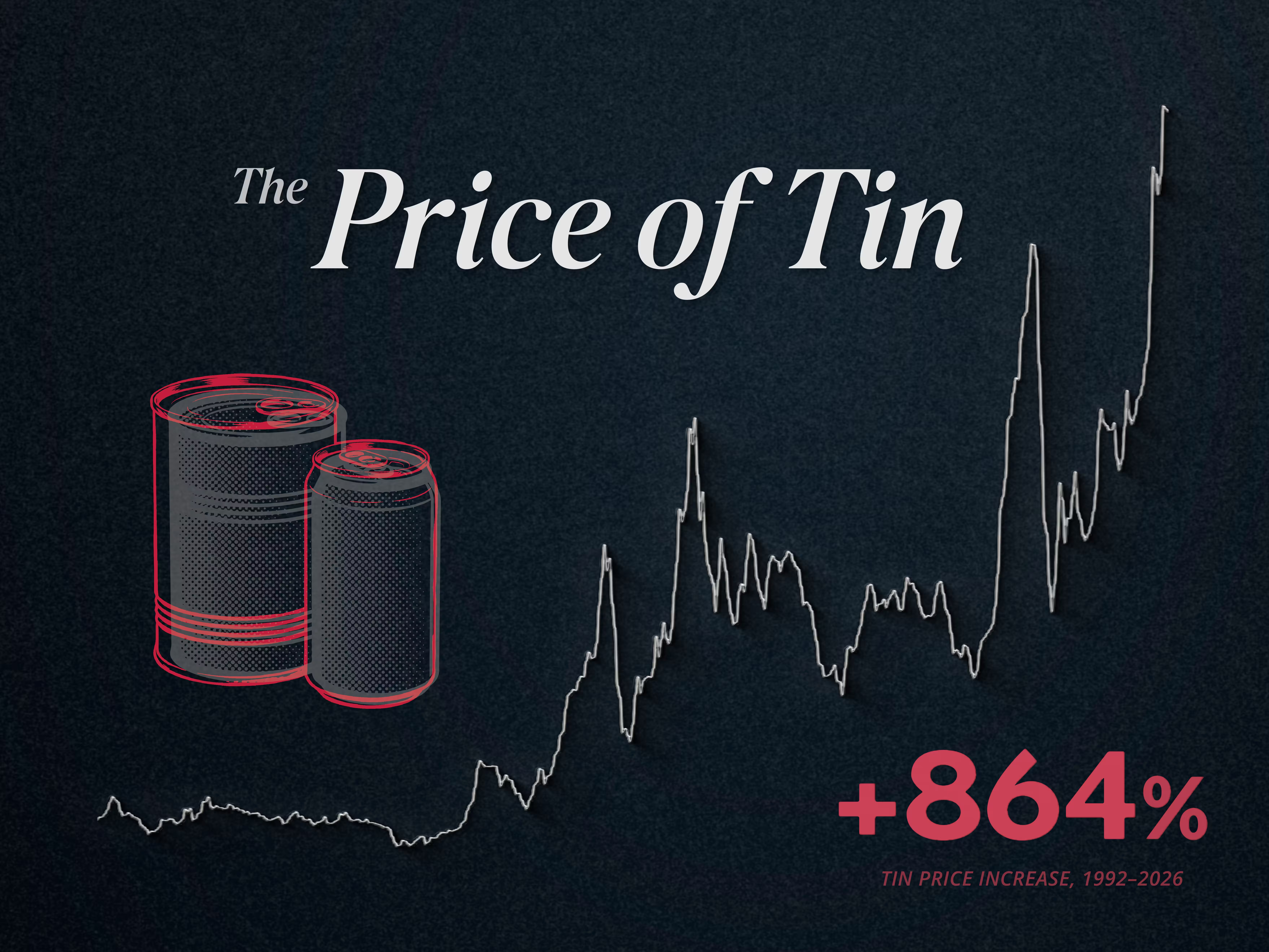
Behind Tin's 2026 Record High
Behind Tin's 2026 Record High
In January 2026, the London Metal Exchange three-month tin contract closed at US$53,462 a tonne, a nominal all-time high that surpassed the March 2022 peak, and it has traded near those levels since. The puzzle is that there is no shortage of tin today: exchange inventories actually rose as the price climbed, rather than being drawn down. Two very different things are holding the price up. The first is short-term: a wave of investor buying, which the industry says drove the January jump. The second is long-term: on current forecasts, the world will not mine enough tin to meet demand later this decade, a gap already projected before the rally began and expected to persist after it fades. The lasting story is that forecast shortfall, not the spike.
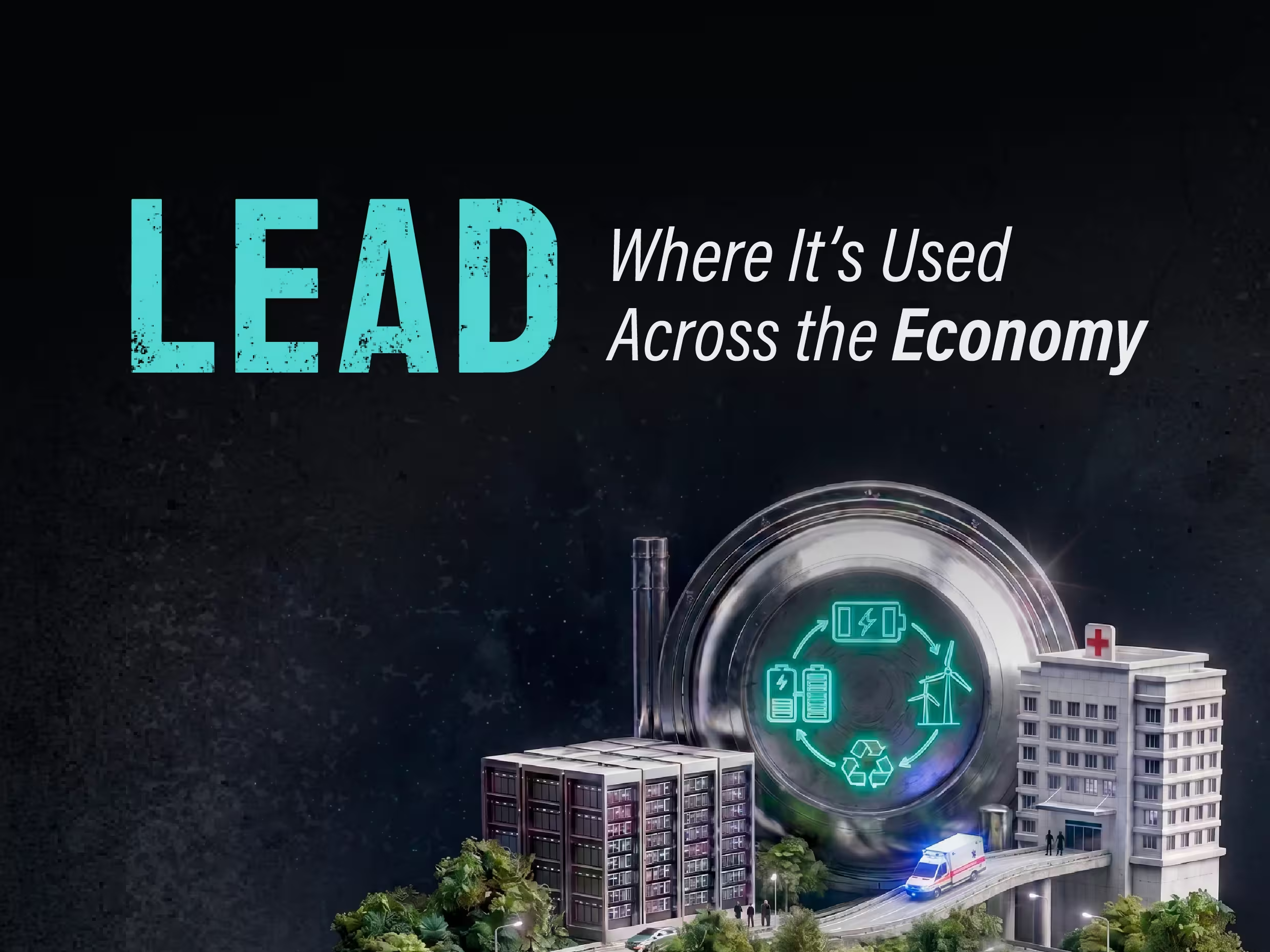
Lead Powers the World's Batteries, and Its Map of Demand Is Shifting East
Lead Powers the World's Batteries, and Its Map of Demand Is Shifting East
You are probably within a few feet of some lead right now. It sits in the starter battery of nearly every car, electric models included, in the backup power rooms of hospitals and data centres, and behind the walls of every X-ray suite. It is also the most recycled product in the United States, recovered mostly from spent batteries. So it came as a surprise to many when Washington added lead to its Final 2025 List of Critical Minerals in November, a label usually reserved for metals in short supply. Lead is not in short supply
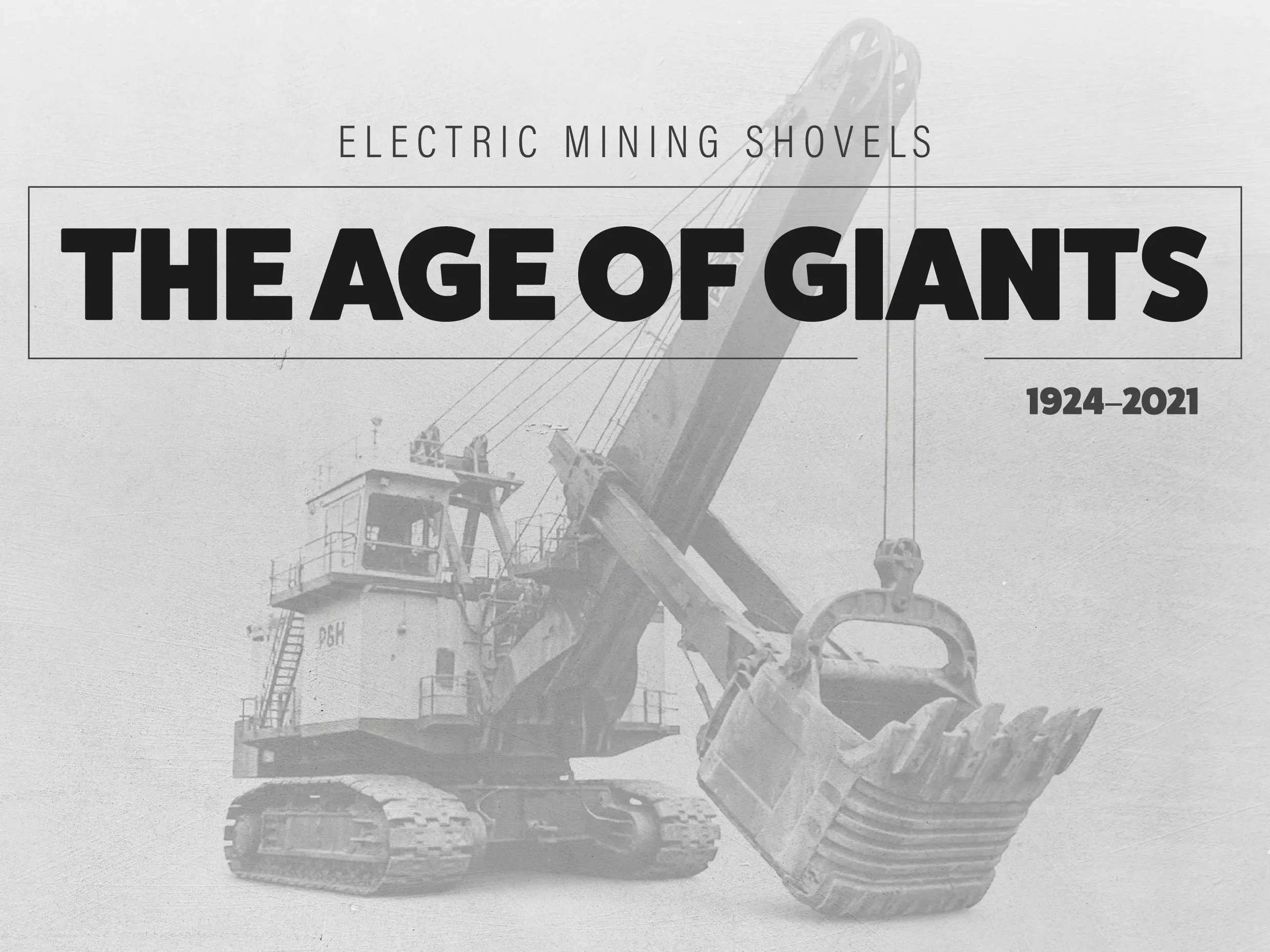
The Age of Giants: How Mining Shovels Grew, Peaked, and Deliberately Shrank
The Age of Giants: How Mining Shovels Grew, Peaked, and Deliberately Shrank
For four decades, the American coalfields hosted an engineering arms race measured in cubic metres of bucket. It ended not with a bigger machine, but with a deliberate retreat. The single largest mobile land machine ever built, the Marion 6360 "Captain," was commissioned in 1965 and destroyed by fire in 1991. No shovel has approached its scale since, and the machines that replaced it were smaller by design.
Interviews
View All


Subscribe to our newsletter
Get the latest news and insights delivered directly to your inbox.